Who’s who
Bergit · Ragnild Tostensdatter · Knud Ingemundsen Helle · Knute Stenerson · Tosten Sebjørnsen · Ole Gjermundsen · Lina Stenerson · Karen · Tollef Kjemhus · Clara Regine
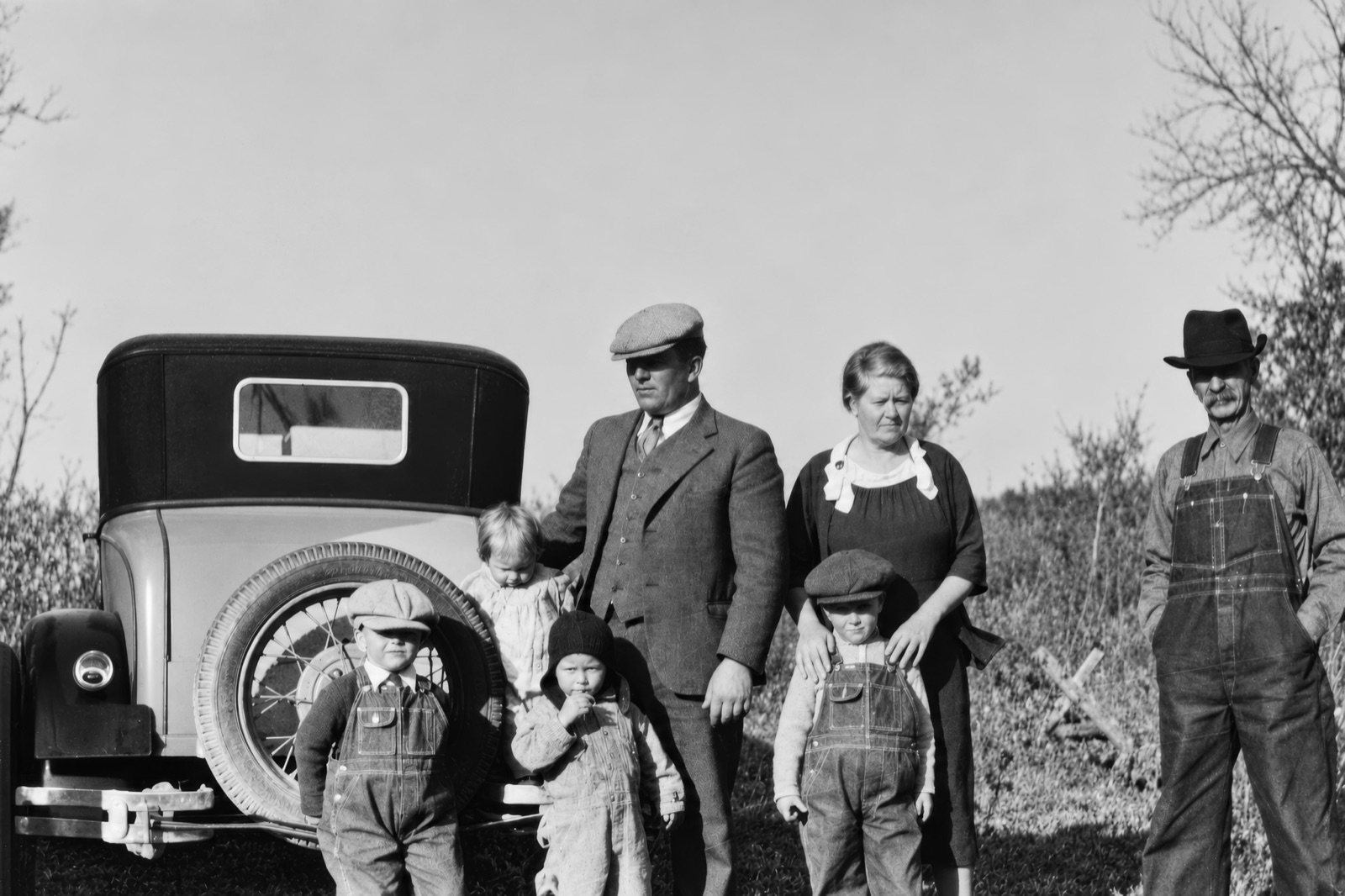
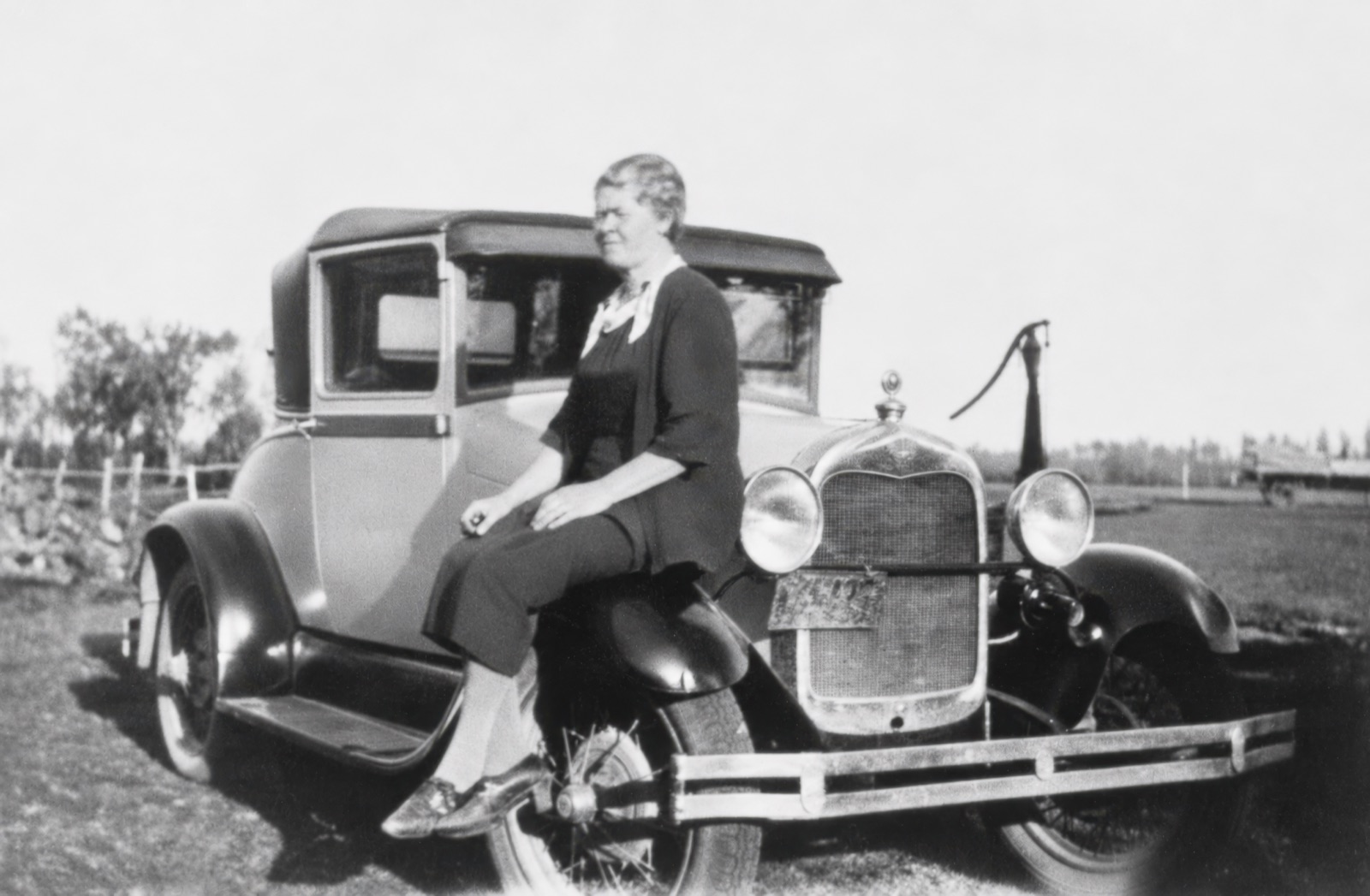
- Bergit, born at Møgstu in Veggli on May 25, 1887. Bergit Knudsdatter in the Norwegian records, Bergit Knutson at her wedding, Bergit Kjemhus after it. Clara’s mother and Carl’s great-grandmother.
- Ragnild Tostensdatter, her mother, a daughter of Møgstu, twenty-four and unmarried when Bergit was born.
- Knud Ingemundsen Helle, her father, who had sailed for America a month before. In Minnesota, Knute Stenerson, lumberman and banker. His page.
- Tosten Sebjørnsen, Ragnild’s father, the farmer at Møgstu.
- Ole Gjermundsen, whom Ragnild married in 1894.
- Lina Stenerson, Knute’s wife, and Karen, their adopted daughter.
- Tollef Kjemhus, from the farm next door, whom Bergit married in 1906.
- Clara Regine, their daughter, born in 1907. Later Clara Amoth, Pete’s mother.
Møgstu
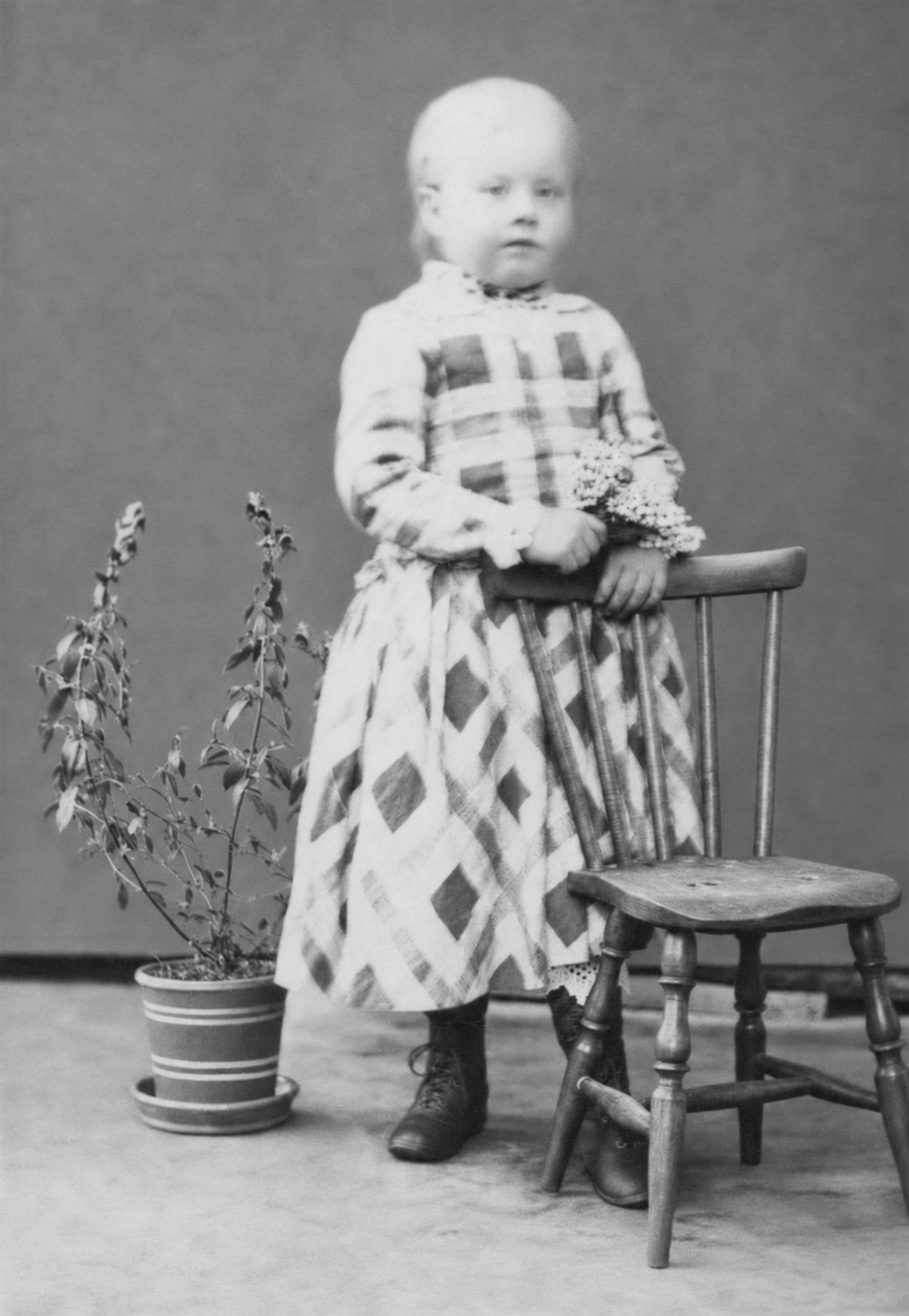
Bergit grew up at Møgstu, a farm in Veggli a few hundred meters from the church, half a kilometer up the valley from Kjemhus. It was a small place of the valley’s ordinary kind. When the census takers came in 1865 her grandfather Tosten had a horse, seven cattle, seven sheep and a pig on it, and sowed barley, oats and potatoes.

Credit
Carl Amoth’s scan.She was born there on May 25, 1887, and christened at Veggli on June 12, entered under the heading the church kept for children born outside marriage. The register asked for the father and the entry gives him: Knud Ingemundsen Helle, bachelor, living in America. He had landed at Quebec a week before she was born.
The census of 1891 has her at Møgstu at four, in Tosten’s house, written in as datterdatter, daughter’s daughter, with her mother, twenty-eight and unmarried, keeping the cattle and spinning. In 1894 Ragnild married Ole Gjermundsen. By 1900 he owned the holding, and Bergit was the daughter of the house, thirteen, with four small half-brothers and sisters behind her. Kjemhus was the next farm down, a few minutes’ walk, and Ole Larsen’s people lived there now. She grew up next door to the farm her husband’s family had lost.
Her father
Her father she knew as a name in the church book, if she knew him at all. He was doing well. Knud Helle had become Knute Stenerson, taking the name of his grandfather Stener. After a year of farm work in Wisconsin, and harvests and cordwood in North Dakota and Minnesota, he had gone into lumber with two of his brothers in 1890. Stenerson Bros. followed the railroads across the Red River valley, a yard in each new town as the track reached it; by 1909 it was a company with its headquarters in Moorhead and Knute as vice president, and he was an officer of four banks besides. He married Lina J. Sten from Ringsaker, and they raised an adopted daughter, Karen. In 1905 he and Lina went back to Norway and visited the old home at Helle, a mile up the valley from Møgstu.
They sailed home on the same ship as Bergit, so the visit fell in the months she was getting ready to go. Veggli was a small parish, and a man home from America with lumberyards and banks behind him would have been news in it. Ragnild lived a mile down the road. Whether she or Bergit heard he was home, or saw him, no record found says.
August 1905: the Montebello and the Cedric
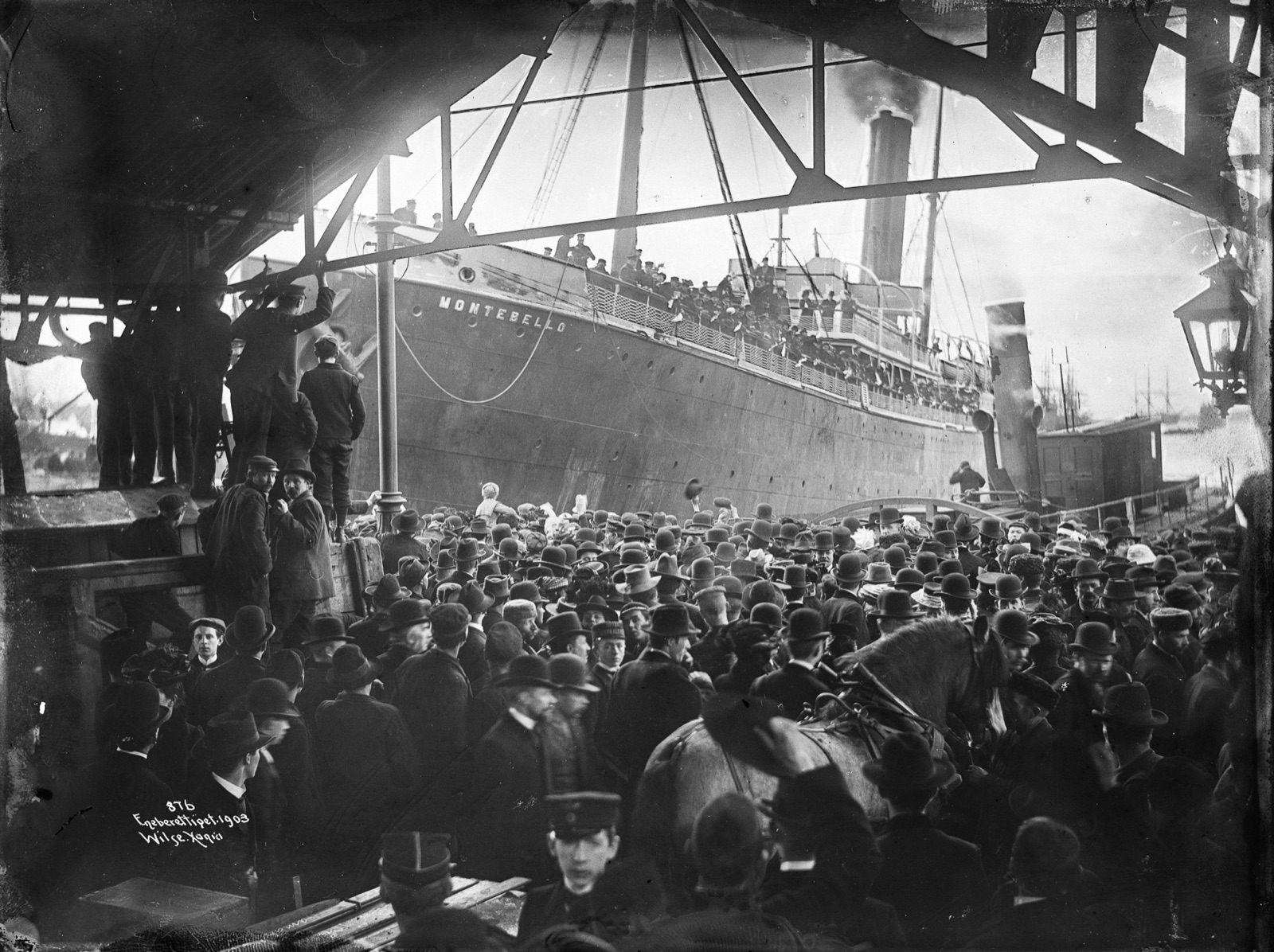
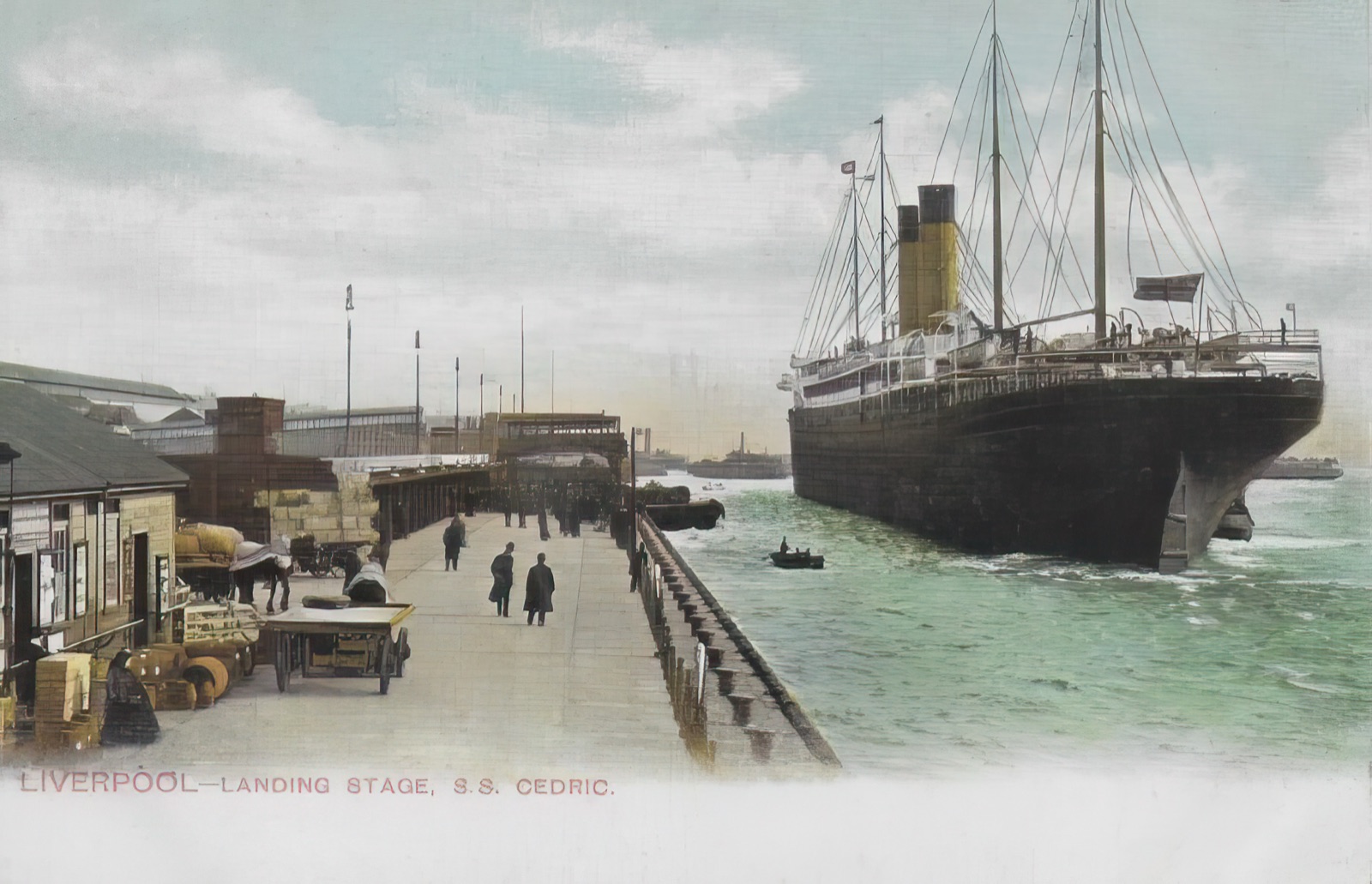
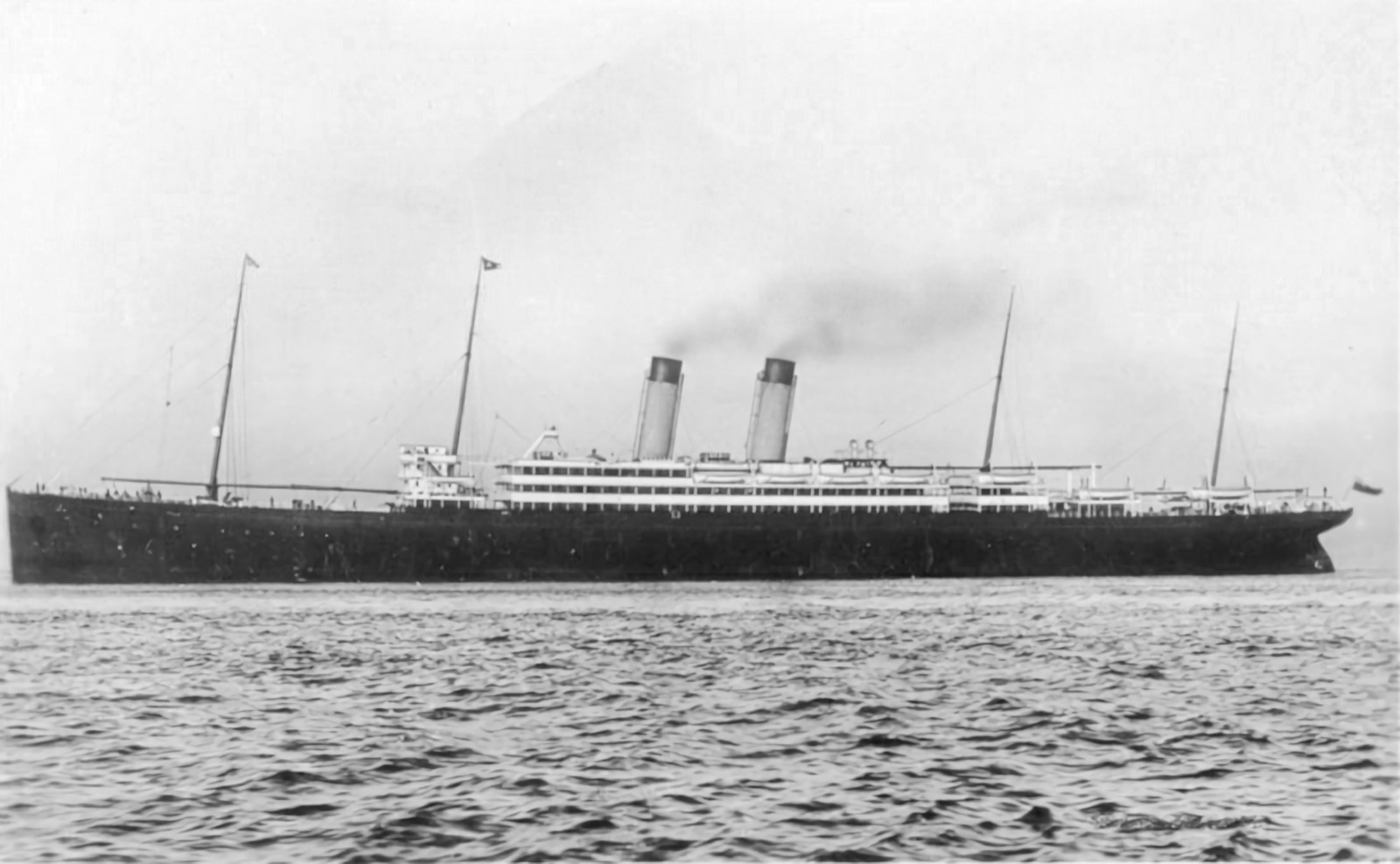
Bergit left that August. She was eighteen. The ChristianiaChristiania Norway's capital, spelled Kristiania from the late 1800s and renamed Oslo in 1925. Emigrants from eastern Norway sailed from its harbor, and the city's police kept a register of them as they left. All the words police wrote her down as Bergit Knudsen Myklestu, of Rollag, living at home, bound for North Dakota, her passage prepaid, with a hundred kroner of her own. On August 25 she boarded the Montebello, the Wilson Line’s steamer to HullHull A port on England's east coast, on the Humber estuary in Yorkshire. Norwegian emigrants crossed the North Sea to it and went on by train to Liverpool for the Atlantic. All the words, from the same waterfront her father had sailed from eighteen years before. A week later, at Liverpool, she went up the gangway of the White Star liner Cedric, two years old and twenty-one thousand tons, the largest ship in the world when she was launched, six times the Toronto that had carried the Kjemhus family. The purser wrote her down on a steeragesteerage The cheapest passage on an ocean ship, in shared quarters below decks. Most emigrants crossed this way. By the early 1900s the lines also called it third class. All the words sheet as a maid who could read and write, last home Veggli, her passage paid by a cousin, going to a cousin at Fairmount, North Dakota.
Credit
Photograph by Anders Beer Wilse, Norsk Folkemuseum NF.W00876. Public domain, via DigitaltMuseum.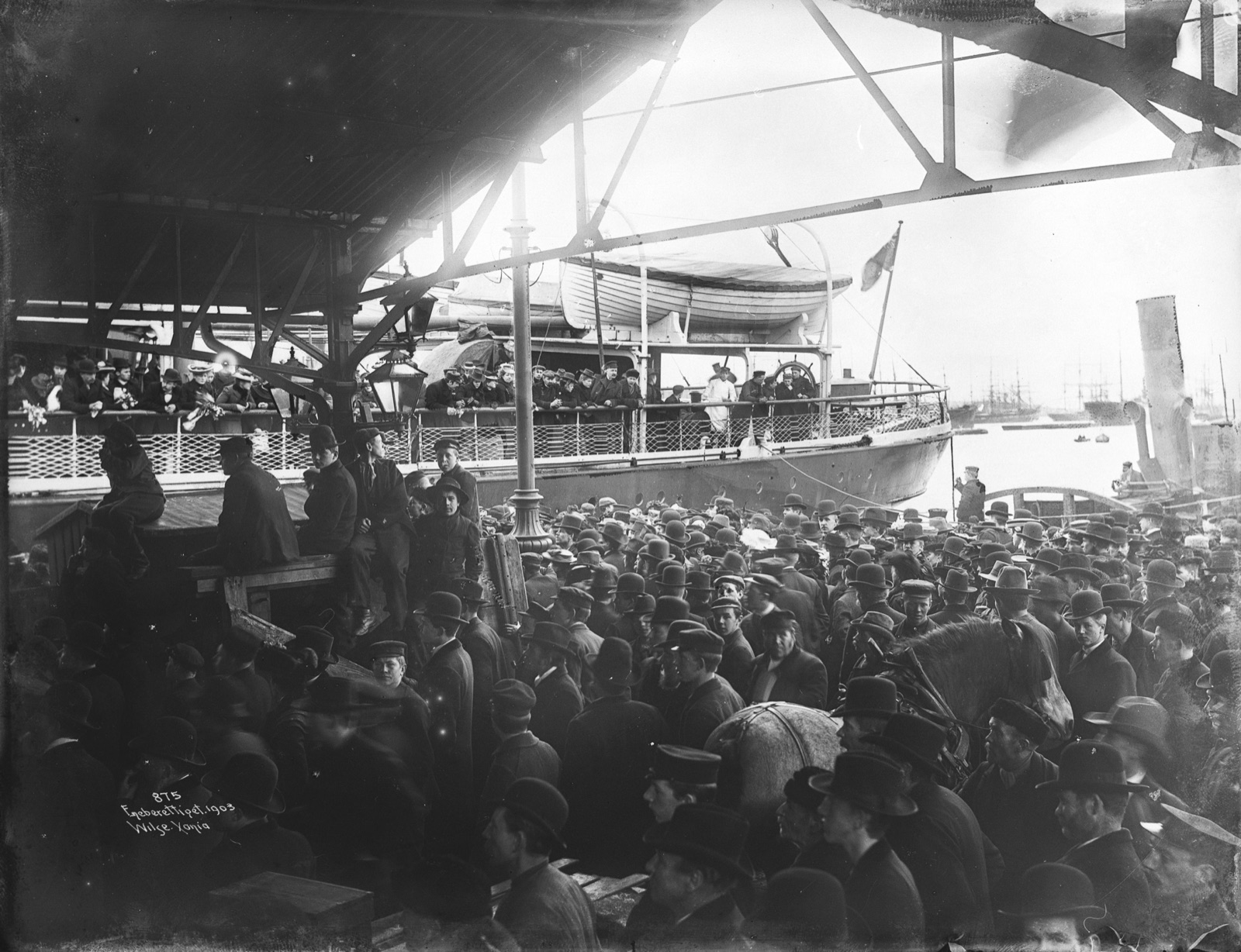
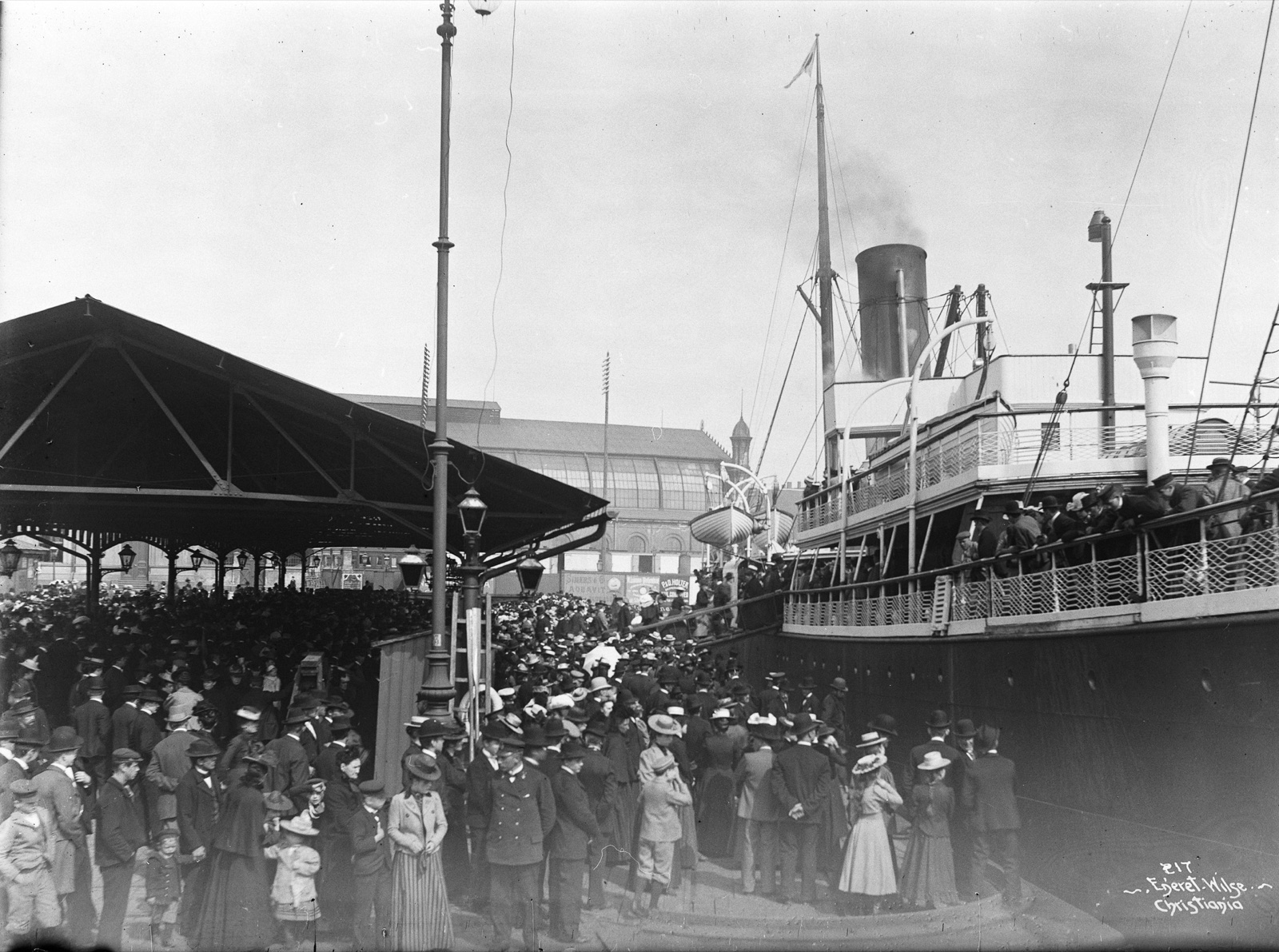
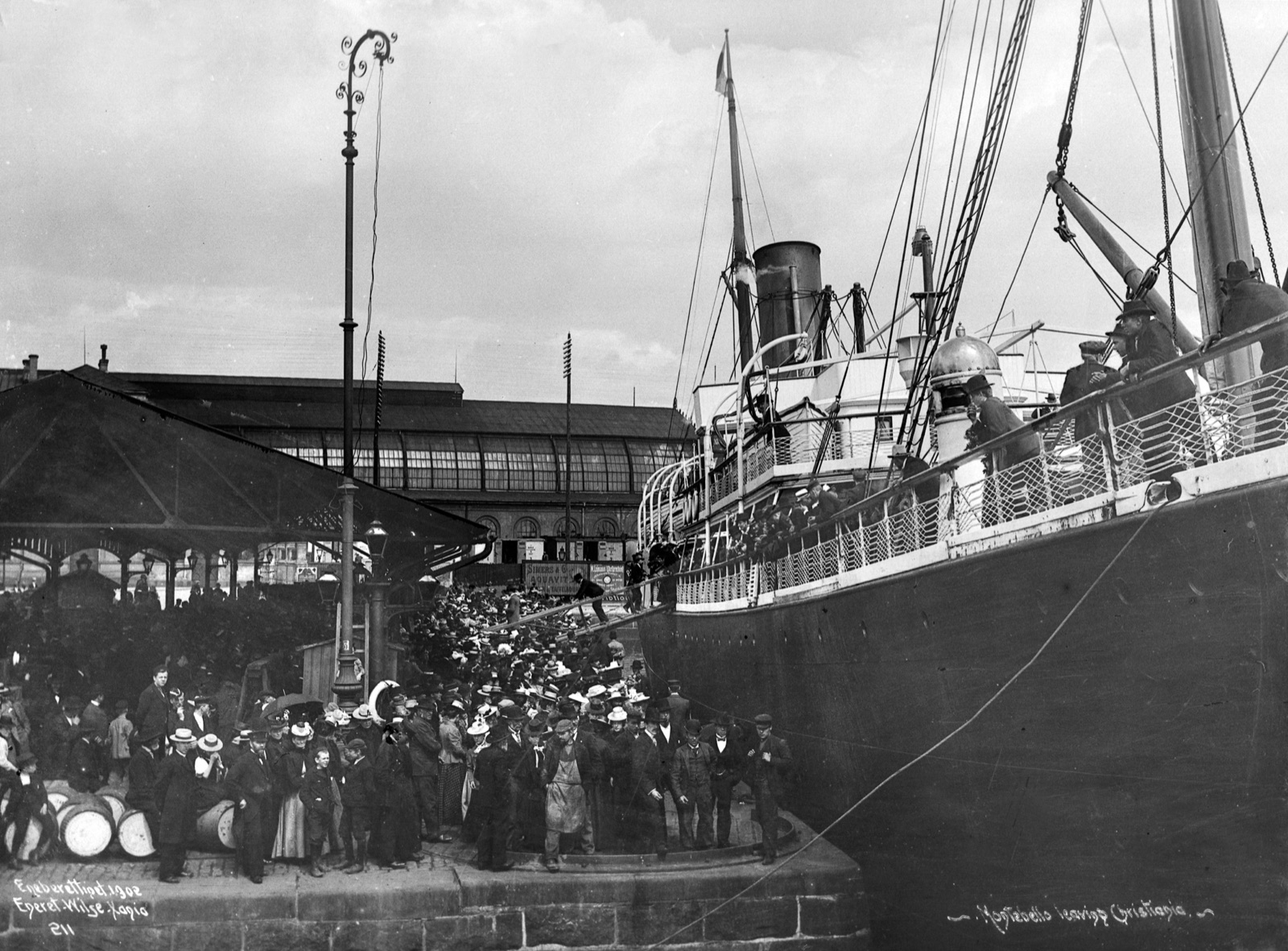
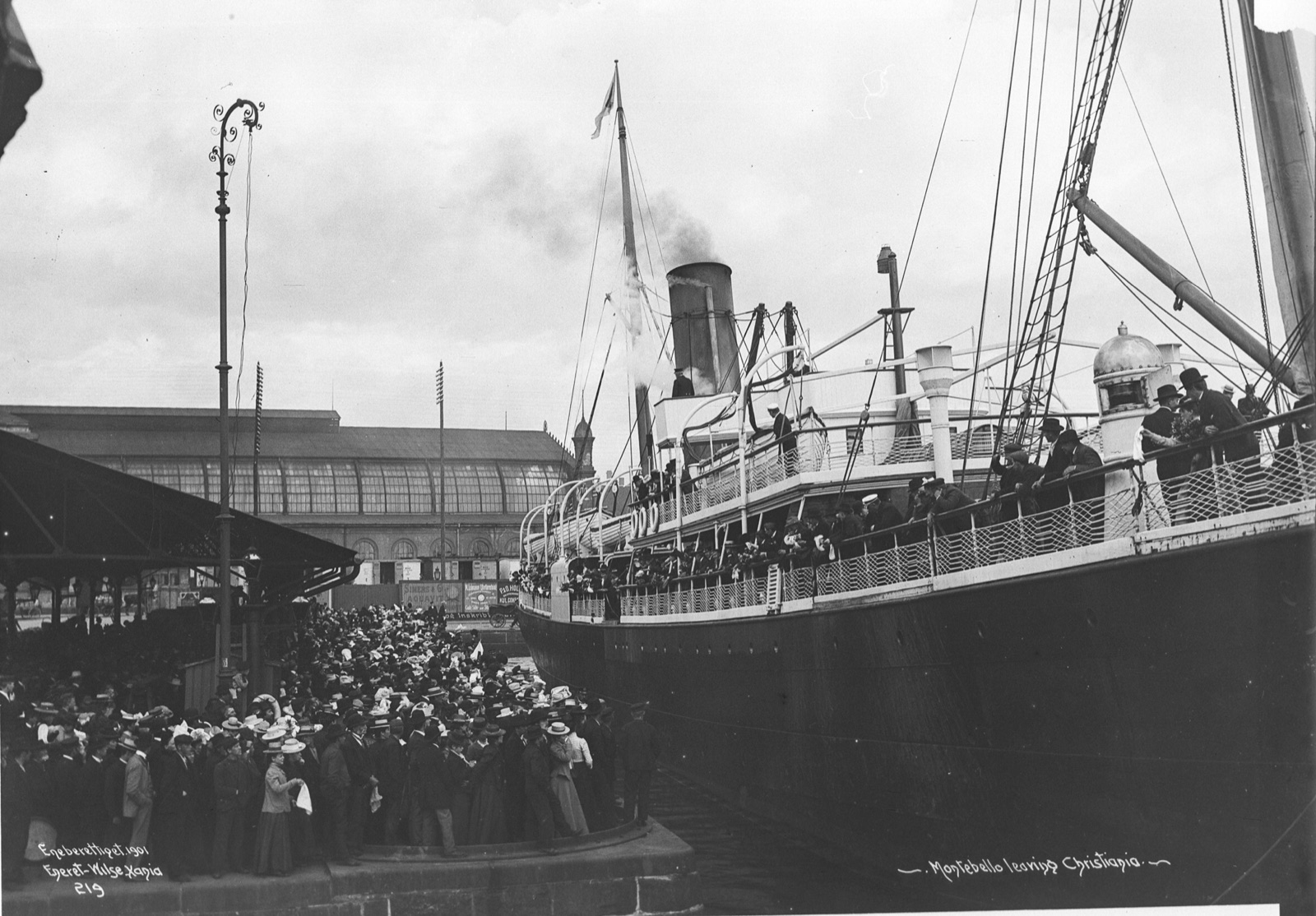
The records of that year say what the way was, if not what it was like for her. At Hull the North Eastern Railway had built the emigrants a waiting room of their own beside Paragon station, with its own platform, to keep them apart from other travelers; from there a train took them across England to Liverpool. At Liverpool the steerage passengers filed between two doctors, and a man from the American consulate handed each one who passed a landing card. The Cedric’s third class was the new kind, built on the plan of second cabinsecond cabin Second class on an ocean liner, between first cabin and steerage: a stateroom shared or to oneself, and meals in a dining saloon. All the words and plainer: rooms of two to eight berths, a section for women traveling without a man, and a dining room with the tables bolted down. When she was new, a London weekly singled out its revolving seats, a pattern until then found only in the saloons. She was built for about two thousand in third class, and six hundred in first and second together.
Credit
An unsigned postcard of 1903, via Wikimedia Commons.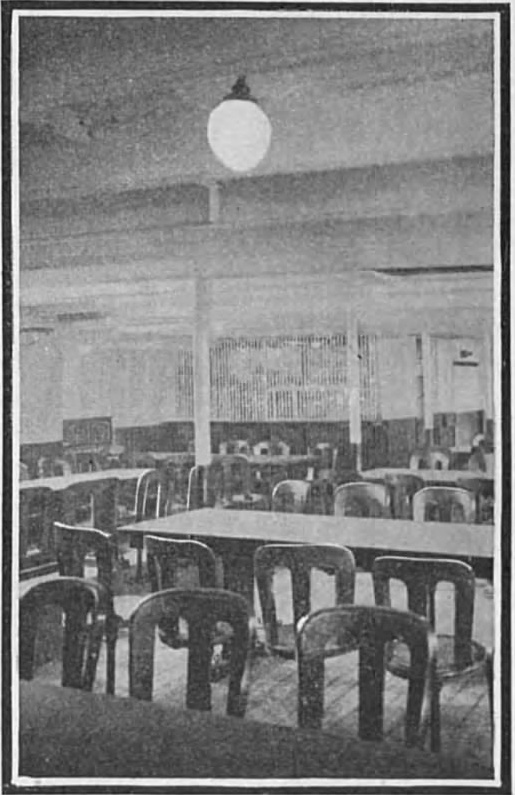
Credit
The Sphere, London, February 14, 1903, p. 150; photograph credited to “Welsh.” Via Newspapers.com.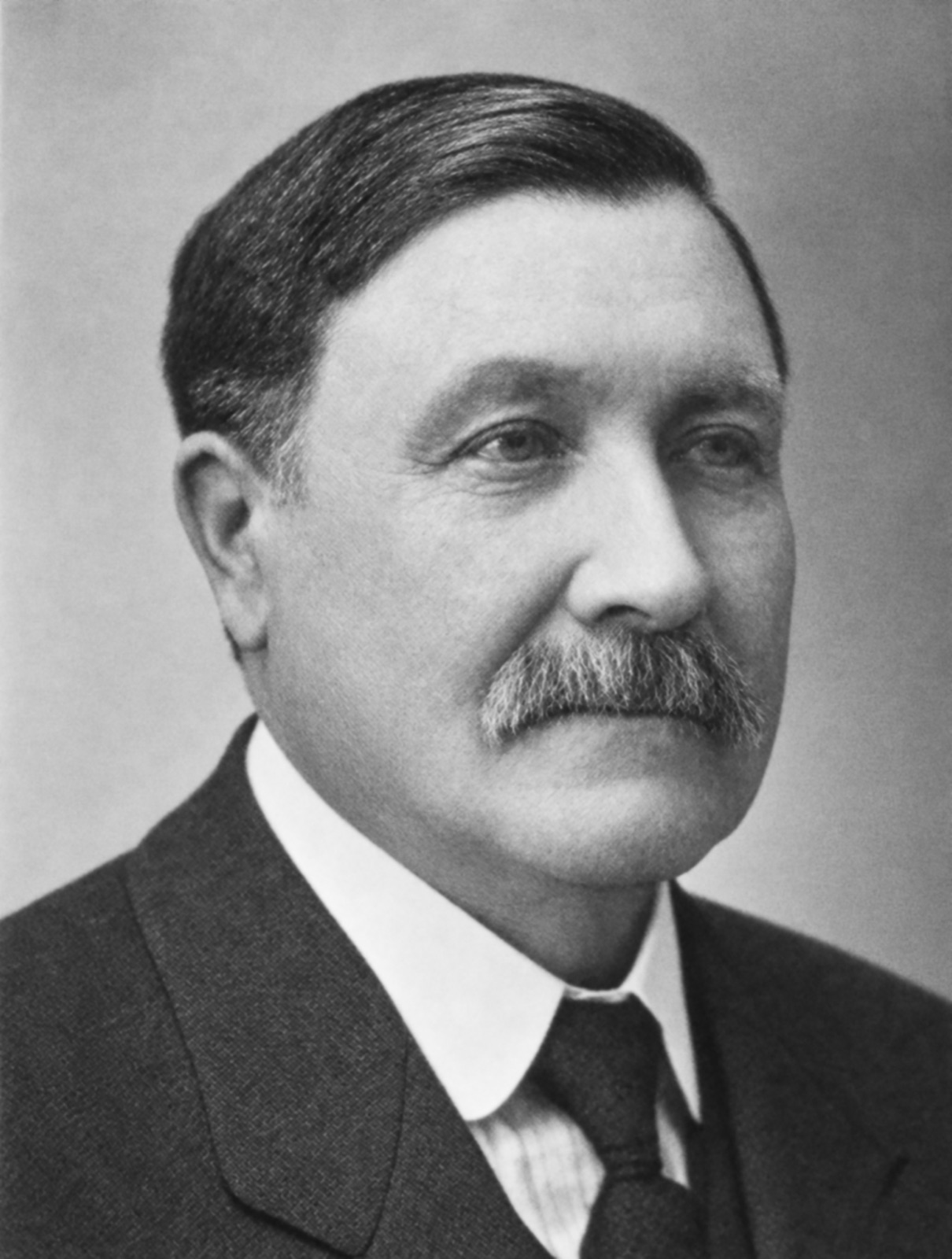

Credit
From the Aarbok for Numedalslaget, 1926 (Numedalslaget i Amerika; printed by Posten Press, Decorah, Iowa).Her father was on the same ship. On the sheet for second cabin the purser had written Stenersen, Knud, forty-three, married, lumberman, last residence Nummedal, bound for Pelican Rapids, passage paid by himself, and under him Lina, wife. He was going home from the visit to Helle. Second cabin on a White Star ship that year meant a stateroom, a saloon with four meals a day, a library, a smoking room and a deck chair for a dollar. Eighteen years before, Knud Helle had crossed from Liverpool in the steerage of the Montreal. The eighteen years lay between the decks.
Father and daughter crossed the Atlantic on the same ship on the same eight days, he in second cabin and she in steerage, he bound for his lumberyards and she for a cousin’s. Whether they had planned it so, or met by chance on deck, or he never knew she was aboard, no record says. What the record says is that her fare was paid by a cousin, and not by him.
Credit
A postcard of 1903; Merseyside Maritime Museum, via Wikimedia Commons.September 1905: New York
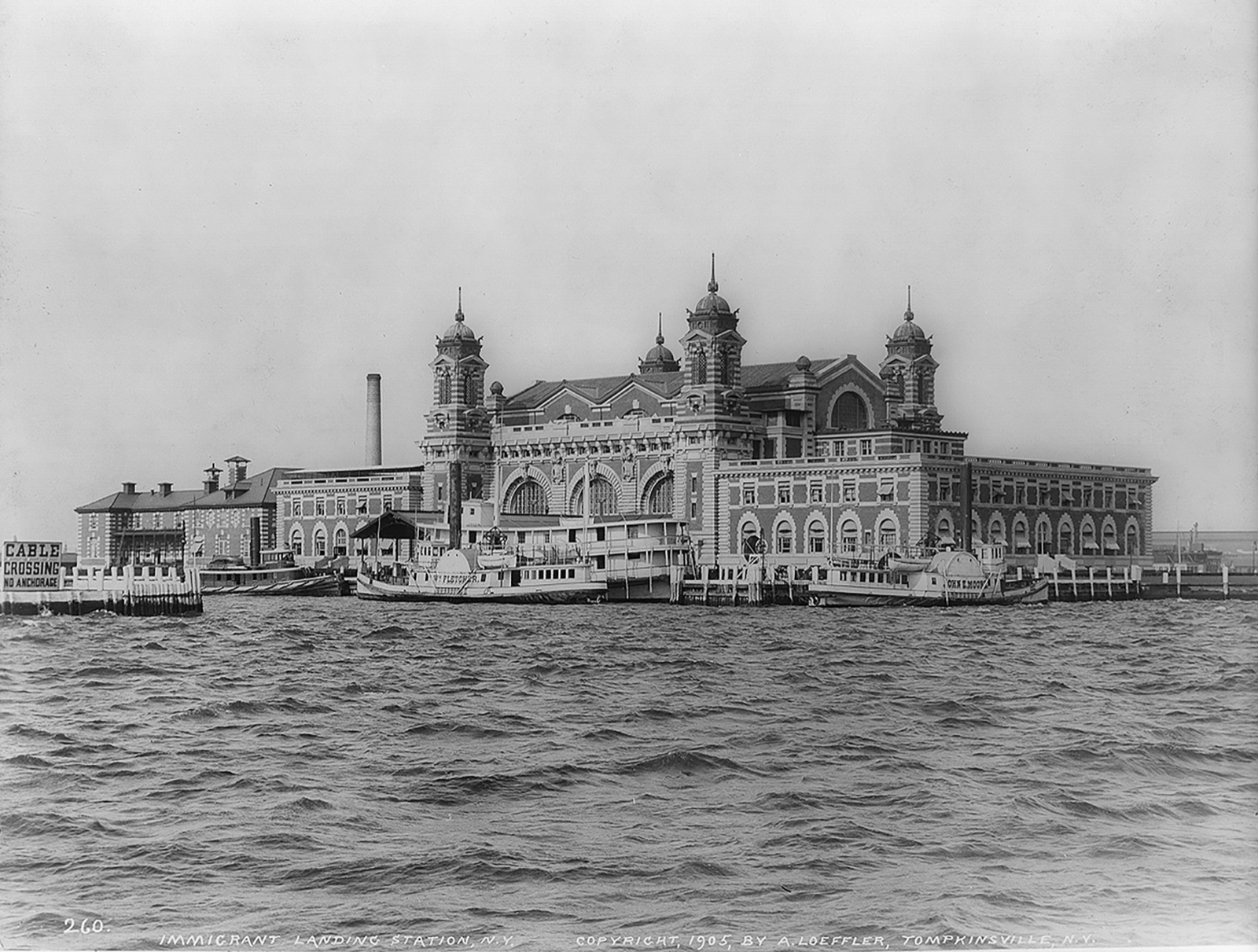
The Cedric came into New York on September 9. The Times had her the next morning with two other liners under one headline, “Three Liners Arrive Loaded with Americans”: every suite and cabin occupied, pleasant weather, nothing to report. Its column named an archbishop home from Rome, Ireland’s last Lord Chief Baron, a Dundee editor who had crossed nearly thirty years before with a family named Roosevelt, and the commander of the ship that had gone out from Tromsø in June to bring Anthony Fiala’s polar expedition home from the Arctic. It said nothing of the steerage. The ship’s own sheets carry the 9th in ink and a pencilled 10, and Ellis Island’s forms the 10th. There the rules parted them, if nothing else had. Cabin passengers were inspected aboard and walked down the gangway at the White Star pier. The steerage went onto barges for Ellis Island.
Credit
Photograph by A. Loeffler, Tompkinsville, N.Y., 1905. Library of Congress, LC-USZ62-29337.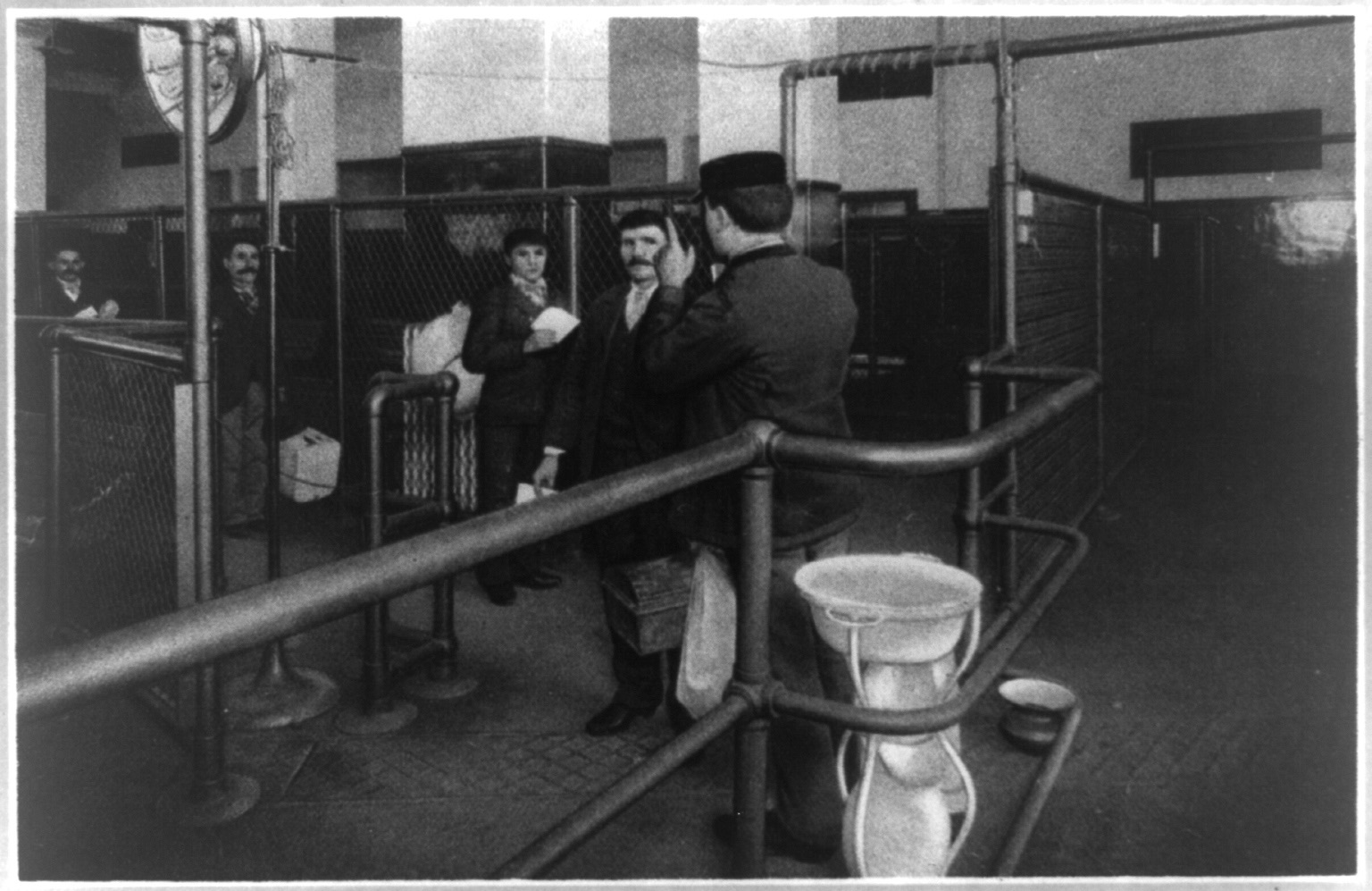
Credit
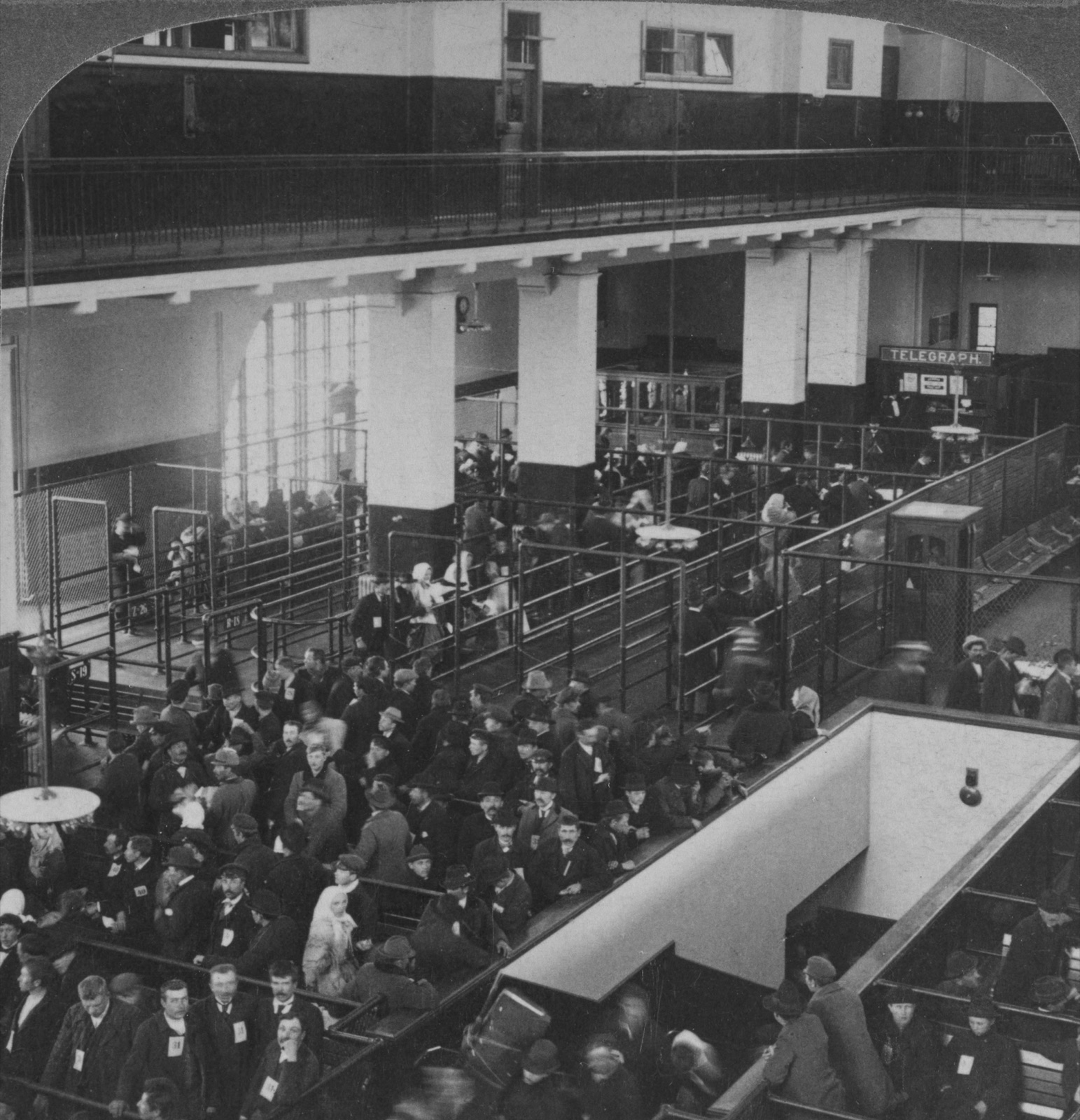
Library of Congress, LC-USZ62-93249.What the island was that year is on record, if what it was for her is not. The barge put the steerage passengers off into a big room shut in with iron gratings. They went in single file past two doctors, one for the body and one for the eyes, and a matron looked the women over. Then a desk, where an inspector had the purser’s manifest open in front of him. He found her line, list eleven, line one, asked her the questions the purser had already asked, and had her show her money. Nine in ten were passed on the spot. Where a newcomer’s entry hung on the relative she was going to, she was held and a telegram was sent. The island’s ledger of the ones it held survives for the Cedric’s voyage, with other passengers off her ship held to meet a cousin or a sister. Her name isn’t on it, nor her father’s, nor Lina’s. So no record says whether she waited, only that nobody wrote her down as waiting. Her railroad ticket west she already had. The sheet says so.
Credit
Underwood & Underwood. Library of Congress, LC-DIG-stereo-1s46119.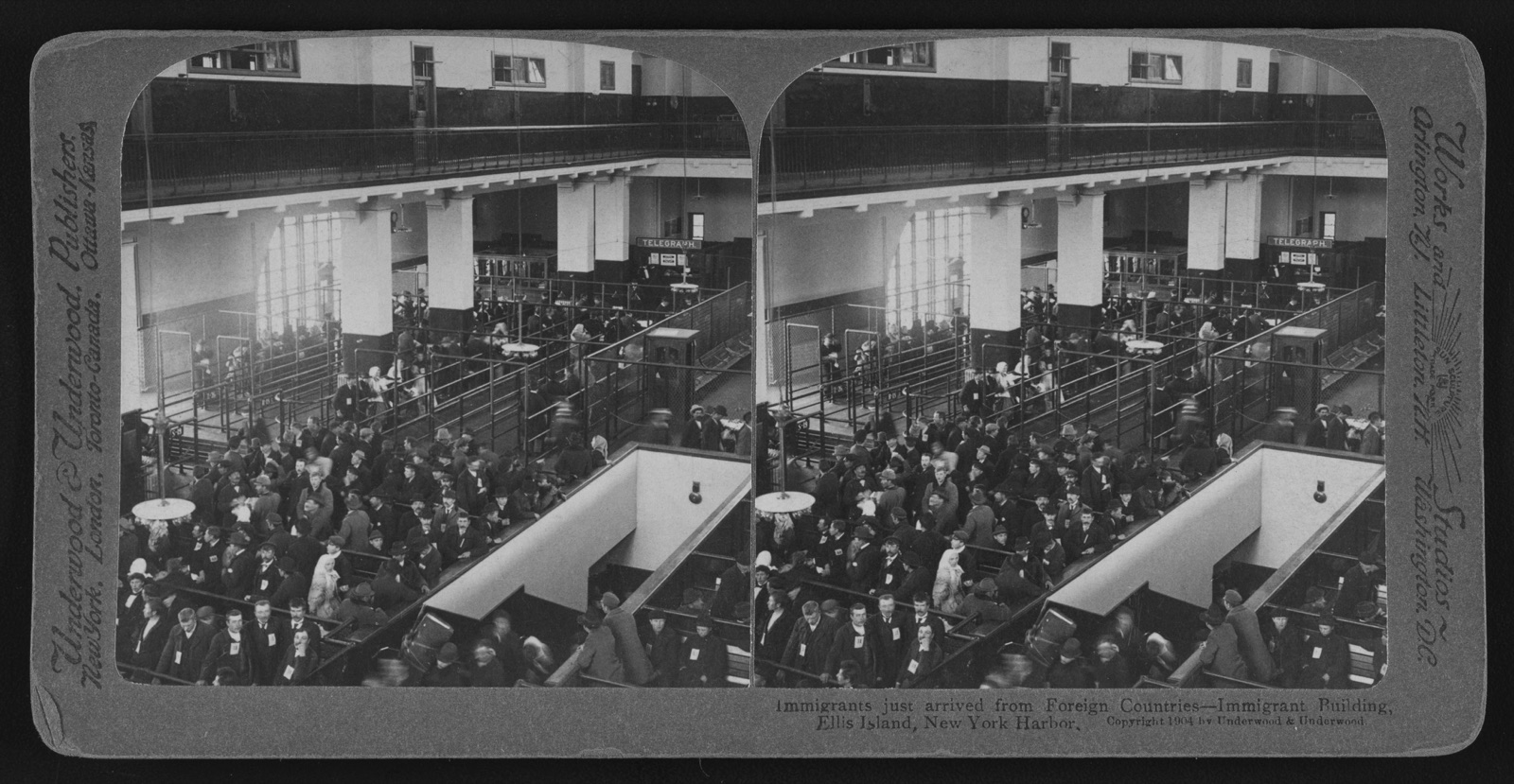
Credit
Underwood & Underwood. Library of Congress, LC-DIG-stereo-1s46119.Fairmount
The cousin’s name on the sheet reads Herbrand Kravig. By 1900 a Herbrand Kravik from Nore, the parish above Rollag, was farming in Richland County, near Fairmount, with his wife Helga and their children, one of them a Herbrand too. Which of the two she meant, the sheet doesn’t say, and how the Kraviks were her cousins is still being worked out in the church books. Fairmount is in the far southeast of the state, a few miles from the Minnesota line, two hundred miles from the Pembina hills and forty-odd from Pelican Rapids, her father’s town. She stayed there a few months, her obituary says, and then went to Walhalla. How she got there, and how she met Tollef, it doesn’t say.
Syttende Mai, 1906
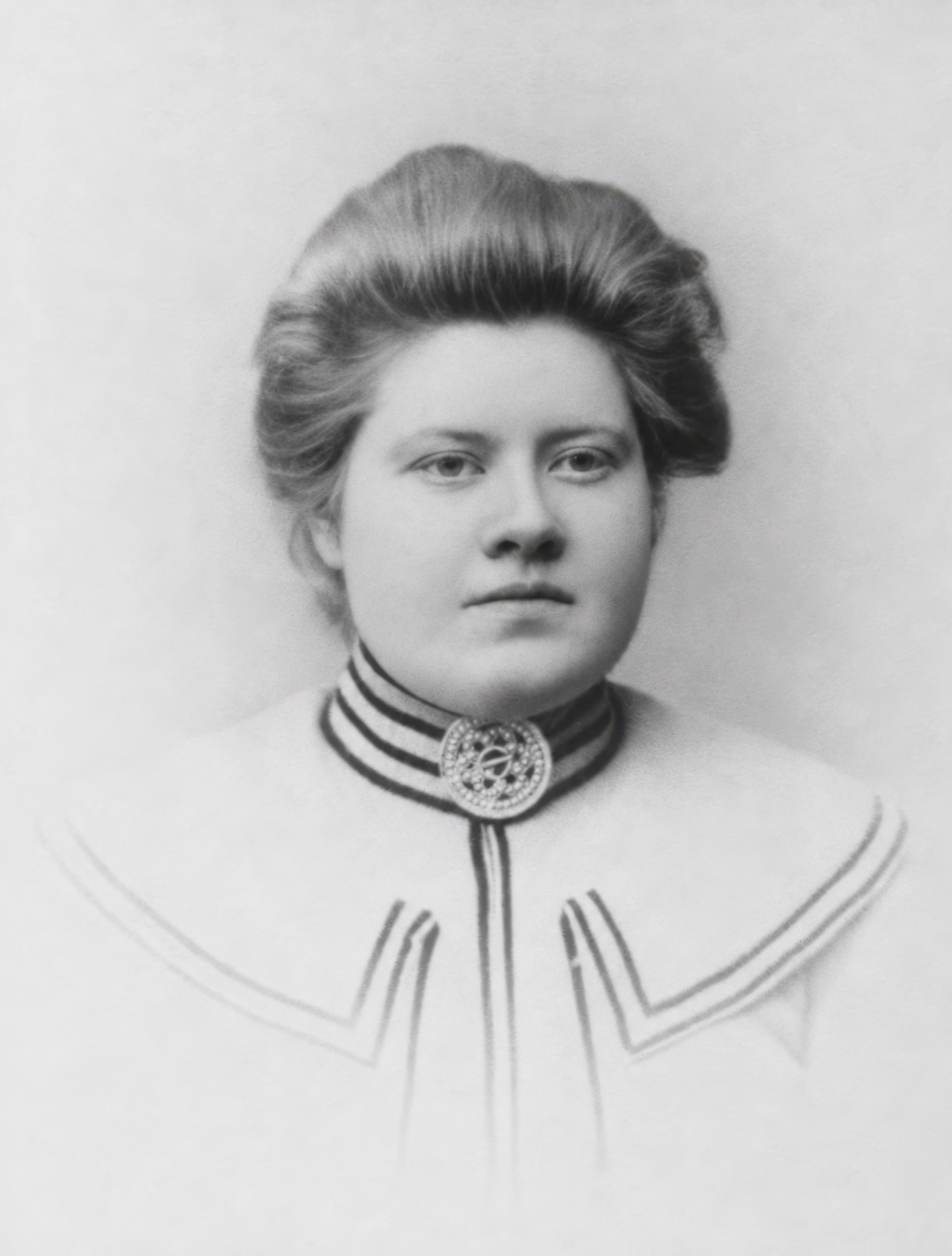
Eight months later, on May 17, 1906, in Grand Forks, Tollef and Bergit were married. The county’s license called him Tollef Kjemhus, thirty-five, and her Berget Knutson, nineteen, both of Walhalla. She was eighteen in fact, eight days short of nineteen. A Norwegian Lutheran register in the city has the wedding in its own hand: Tollef Kjemhus fra Walhalla og Bergit Knutson, 17 Mai i Grand Forks, and two witnesses, Rikka Jorgenson and Axel Jorgenson, whoever they were. She had been born on the farm next to his in the week he sailed, and when he was a boy of sixteen on the Toronto’s steerage deck she was not yet three weeks old at Møgstu.

Credit
Carl Amoth’s scan.It was Syttende Mai, Norway’s constitution day, and the first one since Norway had ended its union with Sweden the summer before. The Grand Forks evening paper carried the words Norwegians’ Independence Day on its front page, and the university opened its new Scandinavian library that day with a celebration that ran all day. Whether they chose the day for that, or because it was the day they could get to Grand Forks, no one wrote down.
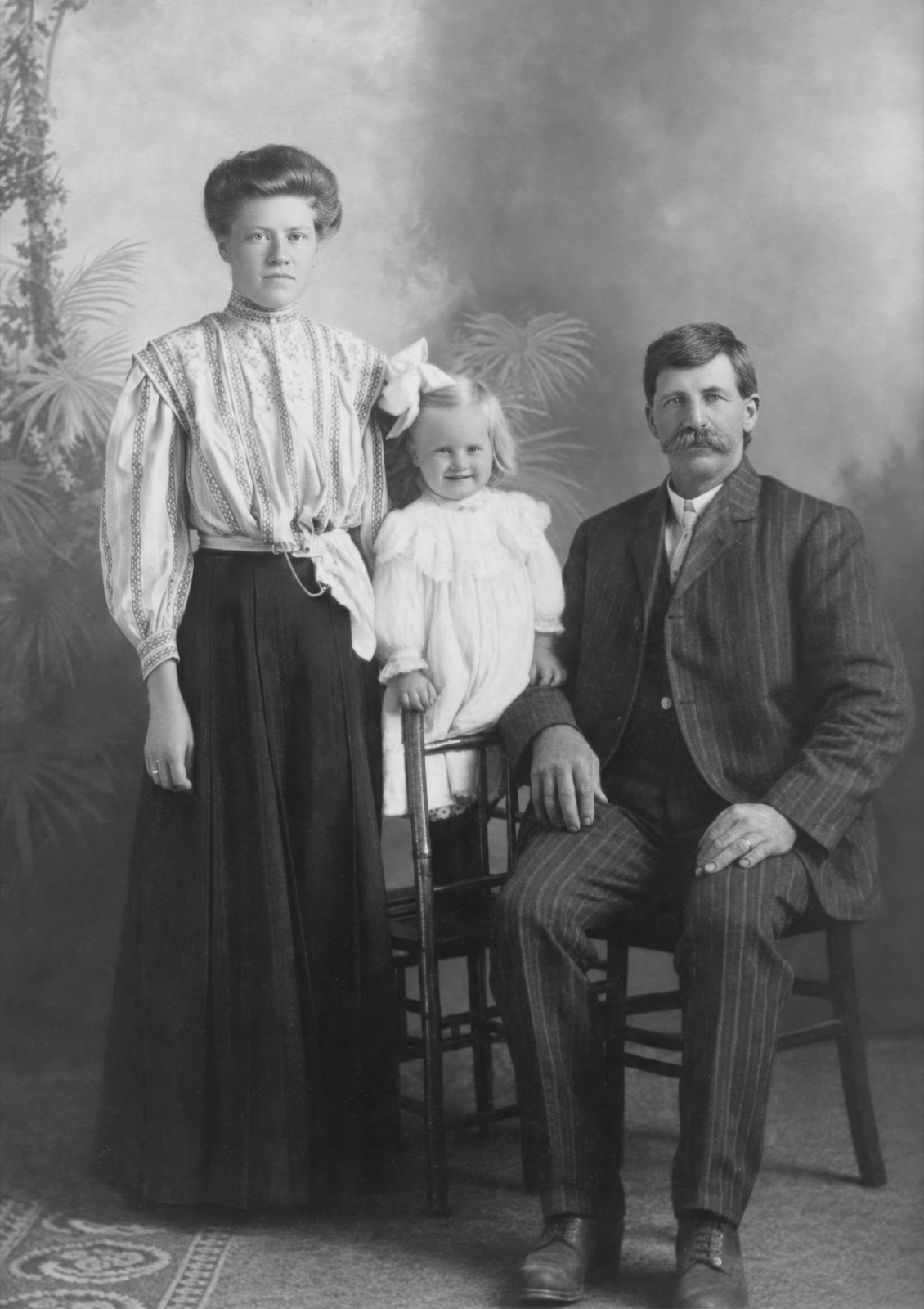
Clara was born on January 20, 1907, on the farm in Fremont Township, and was christened Clara Regine. She was the first of Carl’s direct line born in America. Her uncle Peder had been the first of the family, twenty years before, in the fall of the year they came.

Credit
Carl Amoth’s scan of a print his father kept.1925: a name left out
Knute Stenerson died at Pelican Rapids in April 1925, a lumberman and a banker, and the NumedalNumedal A long valley in southern Norway, running north-west from Kongsberg, where Flesberg, Rollag and Veggli lie. Numedal and its farms → society’s yearbook gave him a memorial. It named his wife and the daughter they had adopted. Neither it nor the notice in the Pelican Rapids paper named the daughter born at Møgstu, who had crossed the ocean a deck below him. She had carried his name as far as her wedding. Knutson, the Grand Forks register wrote: Knud’s daughter. After that day she was a Kjemhus.
The farm, and Langdon
Tollef and Bergit stayed on the farm in Fremont Township, and every census through 1940 found them on it. Pete Amoth, Clara’s younger son, spent his boyhood summers there, and the old man called him gutten, the boy. Pete told his son Carl this himself, and told him he hadn’t much liked it; he would rather have been called by his name. He was hearing it in English. In Norwegian it’s softer than that: gutten min, my boy, is what Solveig sings to Peer Gynt at the end of Ibsen’s play, in the lullaby Grieg set to music, and the big Norwegian dictionary files it under affectionate address.

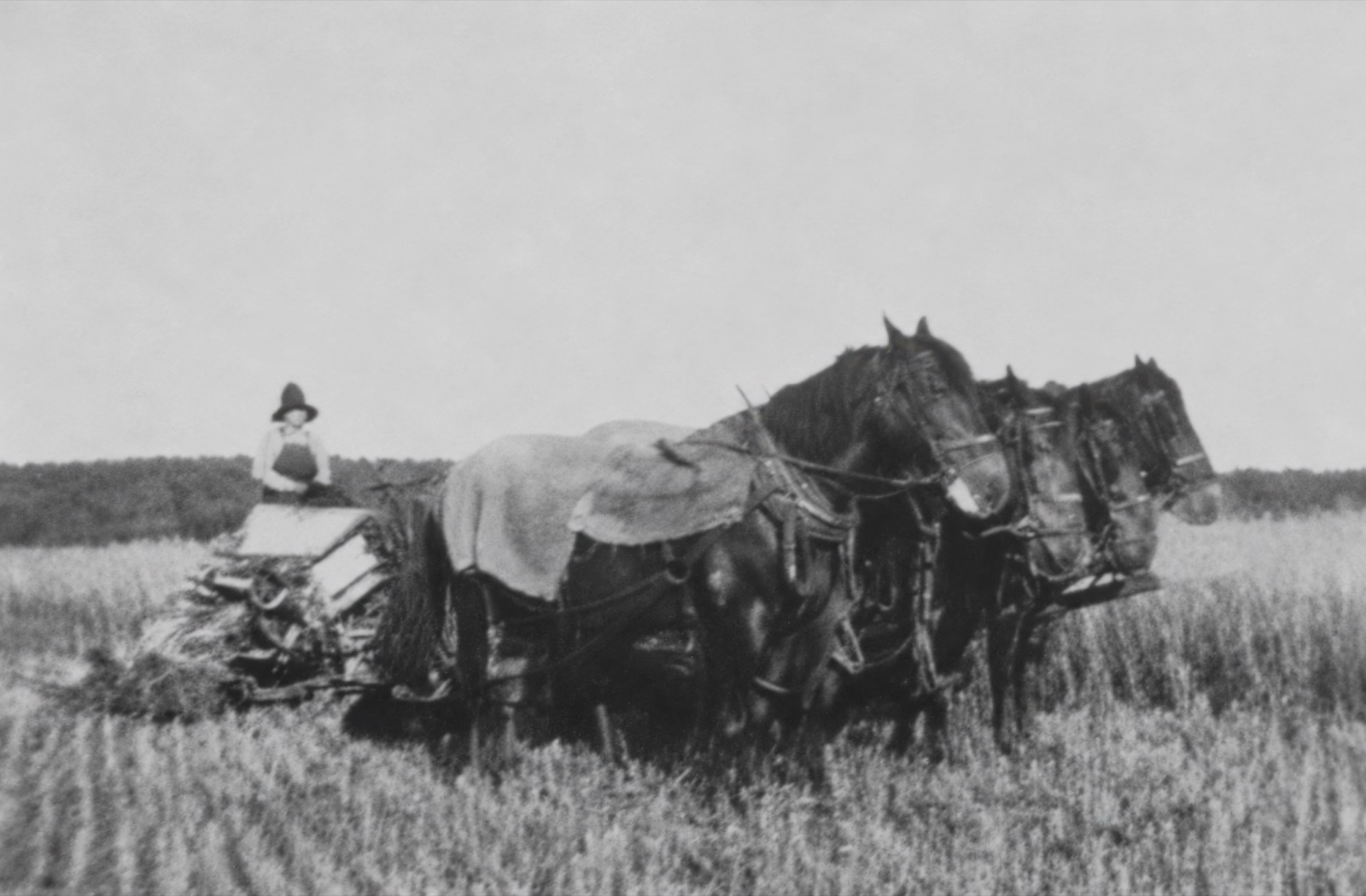
Bergit worked in the fields too, and often, Pete remembered. One of the family’s pictures has her at harvest on the seat of the binderbinder A harvesting machine, pulled by horses and later by tractors, that cut standing grain and tied it into bundles with twine. The bundles were stood up in shocks to dry in the field until the threshing. It was the usual way to harvest grain in the early 1900s, until the combine, which cuts and threshes in one pass, replaced it. All the words, driving four horses abreast.


Credit
Carl Amoth’s scan.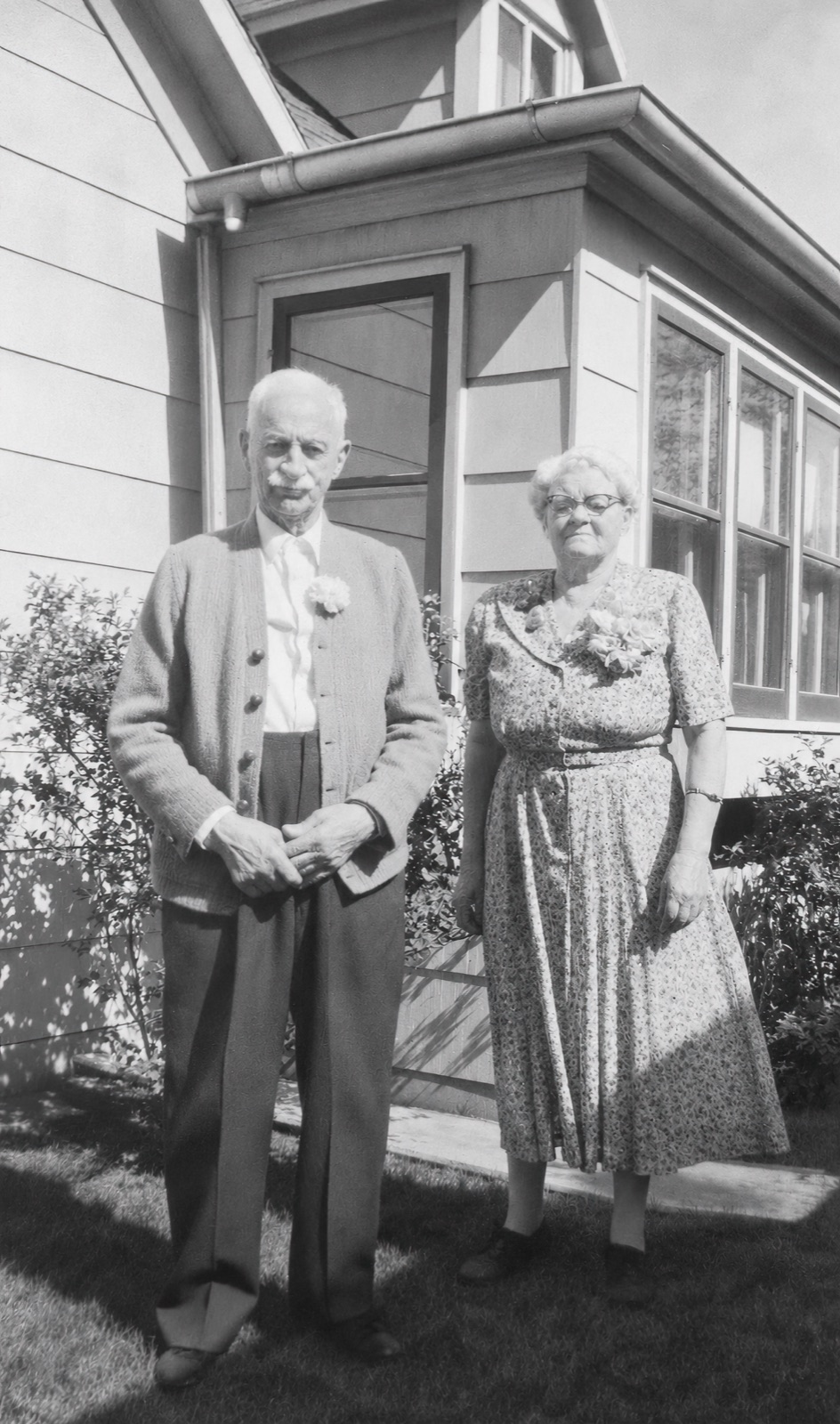

Credit
Carl Amoth’s scan.She was in the Nore Lutheran Ladies AidLadies Aid A congregation’s women’s society (in Norwegian Lutheran churches, the kvindeforening). Its sales, suppers and bazaars raised money for the church, its building and its missions. All the words for many years, its treasurer for twelve and later its president. In the fall of 1961 she and Tollef moved to Langdon.

On Sunday, April 8, 1962, she had a stroke at home, and she died in the Langdon hospital two days later, on April 10, at seventy-four. Two women from Walhalla sang Norwegian hymns at her funeral, one of them “Skal vi mødes hist ved floden,” Shall We Gather at the River. Three brothers and two sisters were still living in Norway, the children of her mother’s marriage. Tollef died the next February in the hospital at Langdon, at ninety-two. They aren’t at NumedahlNumedahl A Norwegian farming community in Cavalier County, North Dakota, named by its settlers after Numedal, the valley in Norway. Tollef Kjemhus farmed there, and his grandson Pete spent boyhood summers on his farm. Numedal and Numedahl → with his mother and brothers. They lie together at Lebanon Cemetery on the east edge of Langdon, under one rough-topped granite stone with the name across it in capitals and, below, two panels cut like open books. Mother, Bergit, 1887 to 1962. Father, Tollef, 1871 to 1963.
What the records don’t say
- Whether Bergit and her father spoke on the Cedric, or knew they shared it.
- How she got from Fairmount to Walhalla, and how she met Tollef. Her obituary says only that she stayed at Fairmount a few months.
- Which Herbrand Kravik she was going to, and how he was her cousin.
- Who Rikka and Axel Jorgenson were.
- Why Tollef and Bergit chose the town cemetery over the churchyard at Numedahl.
How we know
- Bergit’s baptism, Veggli ministerialbok II 1, p. 24 (the page ↗, Digitalarkivet), and the clerk’s copy, p. 25.
- Møgstu in 1891 and 1900: the censuses, at Digitalarkivet: 1891 ↗, Bergit Knudsdatter, 1887, datterdatter, in Tosten Sebjørnsen’s household; 1900 ↗, Bergit K., daughter, in Ole G. Møkstu’s. The 1865 livestock and seed are on the farm’s page.
- Ragnild’s marriage to Ole Gjermundsen, November 17, 1894, Veggli ministerialbok II 1, p. 80 (the page ↗).
- Her father’s life: Knute Stenerson, with its records.
- The emigrant protocol, Christiania police, protocol 23, p. 265, first entry: Bergit Knudsen Myklestu, unmarried, 18, Rollag, living at home, to North Dakota; registered August 18, departed August 25, 1905, the Montebello, agent Elster, passage prepaid, 100 kroner (the page ↗).
- The Cedric’s manifest, sailing from Liverpool September 1, 1905, arriving New York September 9 or 10: U.S. National Archives, microfilm T715, roll 618. Steerage list 11, line 1, “Knudsen, Bergit Myklestu,” 18, maid, reads and writes, last residence Veggli, to “cousin Herbrand Kravig, Fairmount, N.D.,” passage paid by cousin, Kr. 100, ticket to destination; second-cabin list 1, lines 17–18, “Stenersen, Knud,” 43, lumberman, Nummedal, to Pelican Rapids, and Lina, 38; and the voyage’s Record of Detained Alien Passengers and Record of Aliens Held for Special Inquiry, which name none of the three (Ancestry, account needed). The Statue of Liberty–Ellis Island Foundation’s index spells her Borgil Myklentu Kundsen (ID JFWJ-HTR) and him Kund Stinersen (JFWJ-ZZD).
- The arrival, The New York Times, September 10, 1905, p. 7, “Three Liners Arrive Loaded with Americans; An Army of Tourists on the Cedric, Etruria, and St. Louis”: the three ships in port the day before, every suite and cabin occupied, pleasant weather and no incident; the Cedric’s named arrivals are Archbishop Ryan of Philadelphia, Lord Chief Baron Palles of Dublin, Sir John Leng of the Dundee Advertiser and the commander of the Terra Nova, back from Franz Josef Land by way of Tromsø, with others of the cabin class; no steerage figure is given (the Times’s archive ↗).
- The ships: Norway Heritage’s pages for the Montebello ↗ (Wilson Line, built 1890, Christiania–Kristiansand–Hull) and the Cedric ↗ (White Star Line, 1903, 21,035 tons).
- The crossing as it was in 1905, for her class and his: the Hull waiting room, from Historic England’s listing of the Former Immigrant Station and Railway Platform at Paragon station (list entry 1207714: built 1871 for the North Eastern Railway, extended 1881, used only for emigrants bound for Liverpool and America); the Liverpool inspection, from Special Consular Reports, vol. XXX, Emigration to the United States (1904), p. 149; the new-type steerage, from the Immigration Commission’s Abstract of Reports, vol. II (1911), “Steerage Conditions”; the revolving seats and the numbers aboard, from The Sphere, London, February 14, 1903, p. 150, “The First Voyage of the ‘Cedric’” (via Newspapers.com, image 1149396889); the second cabin, from the White Star Line’s General Information for Passengers, Second Class, about 1905; the landing, from Popular Science Monthly, February 1905, “How Immigrants Are Inspected at Ellis Island”; the island, from Prescott F. Hall, Immigration and Its Effects upon the United States (1906). None of them names Bergit or Knud.
- The Kraviks near Fairmount: the 1900 census, La Mars Township, Richland County, North Dakota, enumeration district 143, sheet 10B, Herbrand Kravik, born February 1853, immigrated 1886, with Helga and six children; the Christiania emigrant register, May 28, 1886, Herbrand Olsen of Nore with Helga and three children; and Herbrand O. Kravik, “Fairmount, N.D.,” on the Lusitania’s list, September 1911. The kinship is under research and isn’t in the tree.
- The marriage: Grand Forks County marriage license, May 17, 1906, book 9, Tollef Kjemhus, 35, and Berget Knutson, 19, both of Walhalla; and the church register, ELCA Archives, congregational records, Grand Forks, marriages 1906, p. 9, entry 4, with the witnesses (Ancestry, account needed).
- Syttende Mai, 1906: The Evening Times, Grand Forks, May 17, 1906, p. 1 (Library of Congress, Chronicling America); the University of North Dakota’s history of Norwegian at the university, for the library’s opening.
- Clara: the family tree, January 20, 1907. Fremont Township is family knowledge; the records say North Dakota.
- Knute’s memorial and obituary: as cited on his page.
- The censuses, Fremont Township, 1910 to 1940 (Ancestry, account needed).
- Gutten: Pete, as Carl remembers him telling it. The dictionary is Det Norske Akademis ordbok, entry “gutt,” sense 3, with Ibsen’s line from Peer Gynt.
- Bergit in the fields: Pete, as Carl remembers him telling it. The binder picture is Carl’s scan of a family print, restored.
- The obituaries, Cavalier County Republican, Langdon: “Services Held Saturday for Mrs. Kjemhus,” April 1962, and “Fremont Pioneer Tollef Kjemhus Dies Saturday,” February 1963, from the family’s clipping, which doesn’t give the issues’ dates. They are the source for the months at Fairmount, the Ladies Aid, the move to Langdon, the stroke (a cerebral hemorrhage, the paper says) and the hymns, and for her brothers and sisters living in Norway in 1962, which matches Ragnild and Ole’s children in the tree, three sons and two daughters besides George, who died in 1935. Where they disagree with the records, the page follows the records: hers sends her to “Fairmont, Minn.” (the Cedric’s list: Fairmount, N.D.); his says both came in 1905 (he came in 1887). Hers also names two brothers, both Olof, who died at three and nineteen; the tree doesn’t have them, and its Ole, born 1894, was living in 1920. Her mother is “Ragnhild Rue Mykstue Helle” there, and Bergit “Bergit Mykstue Knutson,” for the farm.
- The stone: Lebanon Cemetery, Langdon, photographed in 2015 on Find a Grave ↗ (Bergit) and memorial 99471906 ↗ (Tollef). Her death, April 10, 1962, from the tree; his, February 16, 1963, at St. Mary’s Hospital, Langdon, from the North Dakota death certificate (1963, no. 626).
Know more, or spot a mistake? Write to Carl.